
Why the DSO party is over in the UK and Europe
The dental roll-up has become a roll-stop. A chartered accountant and practice owner on what the US and Europe reveal, and why dentists should bet on themselves.
The Roll-Up Has Become a Roll-Stop. If you’re thinking of selling, you should bet on yourself.
Many people won’t want to hear this.
But somebody has to say it, so it may as well be the bloke who’s spent 25 years in the engine room of the dental sector.
I write as a Chartered Accountant who has advised hundreds of dental practices over two decades, and as someone who actually owns dental practices alongside my wife, Dr Smita Mehra. I’ve sat on both sides of the table – the spreadsheet side and the surgery side.
So when I tell you the real elephant in the European dental sector is private equity, I’m not lobbing stones from the cheap seats.
Here’s the uncomfortable truth: the DSO gold rush is over. Not slowing. Over.
And if you want to know where the UK and Europe are heading, you don’t need a crystal ball.
You just need to look at America.
How we got here: free money and a feeding frenzy
Rewind to 2019–2021. Money was effectively free. The Bank of England slashed its base rate to 0.1% in March 2020 – the lowest in the Bank’s 300-year history. Private equity could borrow at a whisper and went shopping with both arms.
The play was simple. Buy a well-run practice or mini-group, often paying top dollar for earnings that were already maxed out with little organic headroom left. Bolt it onto a “platform.” Watch the platform get valued at a far higher multiple than the bits that went into it. Then sell the whole thing to a bigger fund for a multiple of a multiple. Financial engineering, dressed up as a clinical revolution. Everyone toasting dentistry’s “golden moment.”
The entire model rested on two assumptions: that money stays cheap, and that there’s always a bigger buyer behind you. Both of those assumptions have just broken.
Just look at America – it’s your leading indicator
The US is the most mature DSO market on earth: roughly a quarter of its ~200,000 practices are DSO-affiliated, and 27 of the top 30 DSOs are private-equity owned. Whatever happens there tends to wash up on our shores two or three years later. So what’s actually happening there right now?
- The market leaders are rated as junk. Heartland, Aspen and Smile Brands – the biggest names in American dentistry – now carry sub-investment-grade credit ratings (B/CAA from Moody’s). For context, historically close to 28% of B-rated borrowers default within ten years. These aren’t minnows. They’re the household names.
- The exit door has jammed shut. Over a two-year stretch, more than 40 DSOs were put up for sale. Fewer than 10 actually sold. The music stopped and most players are still standing there holding their parcel.
- Refinancings are failing. Large DSOs that planned to recapitalise simply can’t – debt has become expensive and lenders have lost their nerve.
- And the equity holders get wiped. In early 2026, the lenders to Dental Care Alliance – a top-tier US DSO – moved to convert their debt into equity and take control of the company. When that happens, the dentists who took shares instead of cash discover their paper is worth roughly what it’s printed on.
- Multiples have collapsed. Tuck-in practices that once commanded a premium now change hands at 3–6x EBITDA.
And we’ve seen this exact film before. In the late 1990s, private equity rolled up doctors’ practices into “physician practice management” companies in the USA – same pitch, same leverage, same promise of scale.
By 2002, eight of the ten largest listed PPMs had filed for bankruptcy.
In this sector, history doesn’t merely rhyme. It repeats, almost word for word.
Europe didn’t dodge this – it got there first
On the Continent, the high-water mark came in 2021, when Colosseum Dental (backed by Jacobs Holding) swallowed Curaeos to build a 620-clinic empire across eleven countries. Since then the big platform deals have gone conspicuously quiet, and the buyers who were once “rolling up” now talk about “optimising the portfolio” – which, translated from private-equity into plain English, usually means: we’ve no cash left to buy, and nobody will lend us more.
But the survivors going quiet isn’t even the real story. Here’s what nobody climbing aboard the UK roll-up seems to mention: Continental Europe ran this exact experiment five to ten years ago. And in several markets the chains didn’t merely stall. They detonated.
Spain was once the country with the most dental clinics in Europe – a forest of low-cost chains built on aggressive advertising, rock-bottom prices and patient finance. Then they fell like dominoes: iDental, Funnydent, Vitaldent, and finally Dentix. Across the failures, an estimated 400,000 patients were left with unfinished treatment – many of them still repaying loans for work that was never done. Dentix alone had more than 350 clinics and over 3,000 staff when it failed in 2020, and it pointed the finger squarely at its private equity backer, KKR, for pulling a promised investment and leaving a €160m hole. Vitaldent survived only by being rescued and rebuilt under new ownership. Same fuel as our roll-ups. An earlier fire.
France had its own reckoning. Dentexia, a low-cost chain, was liquidated in 2016, leaving an estimated 2,300 patients – some toothless or in pain from botched work – and, once again, many still servicing loans for treatment they never received. A fresh class action was filed in 2025; a decade on, it still isn’t resolved. The Council of European Dentists described the model in unusually blunt terms: underprice to grab share, expand, then sell at a profit after a few years. That is the flip, written down in a regulator’s own words.
Germany is the one that should give every investor pause, because it is the largest market in Europe and its government turned openly hostile. Dental ‘medical care centres’ exploded from around 25 to more than 600 in under three years after the rules loosened in 2015. The backlash was fierce: the federal health minister branded private-equity buyers ‘locust investors’ and ‘highly problematic,’ and set out to legislate them out of dentistry. The harshest version of that reform was watered down and then died when the coalition collapsed in late 2024 – but real restrictions still landed, and the political wind in Europe’s biggest dental market now blows firmly into private equity’s face.
Italy and the Nordics tell the quieter version. DentalPro, Italy’s largest group, has passed from VAM to Summit Partners to BC Partners – which has now owned it for the best part of a decade. In an asset class built on three-to-five-year flips, a nine-year hold isn’t patience. It’s a jammed exit. And the Nordics, where this whole movement began, now report the longest average private-equity holding periods on the Continent.
“But the deals haven’t stopped” – no, and that’s the tell
Be ready for the obvious pushback, because someone will make it: dental M&A hasn’t stopped. That’s true. Dentistry was still one of the busiest corners of private equity in 2025. But don’t look at whether deals are happening – look at how. That’s where the story gives itself away.
- The flip is dead. The average healthcare private-equity holding period has stretched to well over six years, up from the old three-to-five-year sprint. Thousands of exits across every sector have simply been parked, waiting for a price that isn’t coming.
- Multiples have compressed. Practices and tuck-ins now change hands at a fraction of the mid-teens earnings multiples that were being floated at the top of the market.
- And funds are increasingly selling to themselves. Continuation vehicles, NAV loans, sponsor-to-sponsor deals – financial workarounds that let a fund pass a business from one of its pockets to another, because a genuine buyer at the price they need can’t be found. mydentist’s 2025 sale was precisely this: one private equity firm handing the parcel to the next.
So the honest verdict isn’t that the machine has stopped. It’s that the machine is turning over assets at half the multiple, holding them twice as long, and increasingly trading them between funds because the premium exit – the very thing a hopeful seller is dreaming of, has gone.
That isn’t a booming market. It’s a market holding its breath.
And the UK is still queuing for the train
Which brings me home, and to the part that genuinely puzzles me. While Spain was clearing up the wreckage and Germany was reaching for the statute book, the UK has spent the last few years cheerfully climbing aboard the very same train. A train that, in my view, left the station years ago.
Money costs the same here. The Bank of England base rate sat at 0.1% through Covid, peaked at 5.25% in 2023, and sits at 3.75% today – and with inflation back above 3%, the next move could just as easily be up as down. The cheap-debt arbitrage that powered the roll-ups is gone, and it isn’t coming back at the price these groups need it to.
Our own cautionary tale is hiding in plain sight: mydentist. Britain’s largest dental group has been passed around like a parcel at a children’s party = Merrill Lynch, then Carlyle in a heavily-leveraged 2011 deal stacked with hundreds of millions of pounds of bonds, then Palamon, then sold on again to Bridgepoint in 2025. Along the way, performance wobbled, hundreds of practices were quietly sold or closed, and the entry multiple drifted from around 10x back down to earth. Not every owner walked away smiling.
Bupa told the same story in plainer English. In 2023 it announced it would close, sell or merge 85 practices – roughly a fifth of its UK estate and around 1,200 jobs – blaming the dentist shortage, inflation and the broken NHS contract. When one of the largest, best-capitalised operators in the country starts handing contracts back to the NHS, that is not the behaviour of a growth market.
A dental roll-up has become a roll-stop.
If you took equity instead of cash – read this twice
Plenty of vendors over the last five years were persuaded to take a slice of their payout in group shares. “Roll equity,” they call it. “Align our interests.” It sounded clever at the time.
Here’s the problem. If the group has to refinance – or hand the keys to its lenders, as we’re now watching happen in the US – your equity sits at the very bottom of the pile. Debt gets paid first. You get whatever is left over, which can be precisely nothing.
So you’re left with two choices, both poor. Stay on for another few years, hoping a recovery makes your shares worth something again. Or walk away and write the equity off entirely.
That isn’t a deal. That’s a hostage situation with a dental chair.
The part nobody says out loud: be careful who you sell to
This is the bit I really want you to hear.
When a private equity buyer offers to buy your practice, ask yourself one simple question:
What do they know that I don’t?
Because here’s the asymmetry. You’ll sell a practice perhaps once in your life. They buy them for a living. They have a deal team, a financial model, a data room and twenty comparable transactions sitting in a folder. They’ve run the numbers on your business more thoroughly than you ever have. And they’re offering you a price because they’ve concluded that, in their hands, your practice is worth more than the price they’re paying.
Read that again. They’re paying you X because they believe it’s worth X-plus. The gap between X and X-plus is your money – and you’re handing it over with a smile and a firm handshake.
Sometimes that’s a perfectly fair trade. If you’re done – tired, ready for your life back – take the cheque and go with my blessing. There is no shame whatsoever in selling.
But if you’re selling because you think you’ve run out of road, while a stranger with a spreadsheet has concluded there’s plenty of road left, then the rational move isn’t to sell. It’s to do exactly what they were planning to do. Bet on yourself.
You know your patients. You know your team. You know your town. The “synergies” a buyer models from a boardroom in London or Zurich, you can capture yourself – in your own surgery – and keep the upside. The only things they genuinely have that you don’t are capital and confidence. Capital is cheaper to find than you think. The confidence you earned the day you signed the lease.
So what now?
The flip is well and truly over. The easy money has gone. For the next few years the DSO model in the UK and Europe is, to borrow my own phrase, dead in the water – not because consolidation is a fundamentally bad idea, but because this wave of it was built on cheap debt and the next greater fool, and both have now left the building.
The winners from here won’t be the biggest. They’ll be the best run. Independent practices and small groups that are efficient, well-led, clinically excellent and genuinely innovating – in technology, in patient experience, in how they treat their people – those are the ones who’ll quietly compound while the roll-ups spend the next five years “optimising.”
So optimise your own EBITDA. Build something worth keeping. And if someone does come knocking, by all means open the door – but count your fingers after you shake their hand, and never forget to ask the only question that really matters.
What do they know that you don’t?
Sources
- Bank of England base rate history (0.1% Covid low; 5.25% peak Aug 2023; 3.75% held since Dec 2025) – Bank of England / money.co.uk, 2026.
- US DSO market structure: ~25% of ~200,000 practices DSO-affiliated; tuck-in multiples 3–6x EBITDA; 40+ DSOs marketed vs <10 closed over two years – Lincoln International, “Dental’s Global Sector Health in 2025”.
- 27 of the top 30 US DSOs private-equity owned – Private Equity Stakeholder Project, 2021.
- Credit ratings of Heartland, Aspen, Smile Brands (B/Caa); ~28% ten-year default rate for B-rated issuers – Moody’s / S&P Global 2024 Default Study, 2025–26.
- Dental Care Alliance lenders converting debt to equity/taking control – 9fin, Feb 2026.
- Physician practice management collapse: 8 of 10 largest listed PPMs bankrupt by 2002 – SOLIC Capital / Dental Products Report.
- mydentist ownership chain (Merrill Lynch → Carlyle 2011 → Palamon 2021 → Bridgepoint 2025); ~10x entry multiple, c.£560m bonds – Unquote / Palamon.
- Bupa Dental Care: 85 practices to close, sell or merge (~1,200 jobs) – BBC / Bupa, 2023.
- Colosseum Dental / Curaeos (620 clinics, 11 countries; Jacobs Holding) – Dental Tribune / Grand View Research, 2021–25.
- Spain – collapse of iDental, Funnydent, Vitaldent and Dentix (~400,000 patients affected; Dentix 350+ clinics, €160m owed to KKR, insolvency 2020) – El Independiente/Público/Investors in Healthcare.
- France – Dentexia liquidation 2016, ~2,300 patients, fresh class action 2025 – Connexion France/Council of European Dentists.
- Germany – dental MVZ growth (25 to 600+); ‘locust investor’ reform watered down and lapsed after 2024 coalition collapse; partial restrictions enacted – Marwood Group/Chambers/Pinsent Masons/Healthcare Business International.
- Italy – DentalPro ownership chain (VAM → Summit 2015 → BC Partners 2017, still held) – Lincoln International / VAM / BC Partners.
- PE exit drought / holding periods (~6.4 yrs healthcare; thousands of exits delayed; rise of continuation vehicles & sponsor-to-sponsor deals) – S&P Global Market Intelligence / PwC / Bain 2026 Global Healthcare PE Report.
- UK practice valuations c.6.5–9.5x EBITDA (2025) – Eclipse Corporate Finance.
About the Author
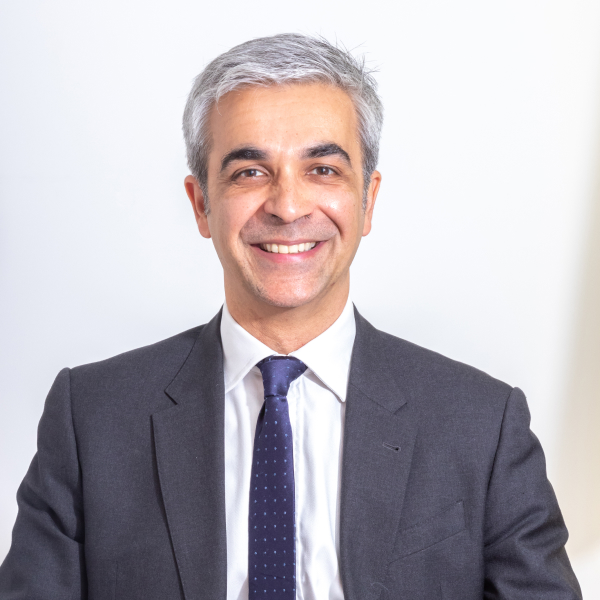
Arun Mehra
With over twenty years of commercial experience and knowledge in Dentistry, Arun’s expertise is valued by hundreds of businesses across the UK. His financial acumen and know-how, along with his hands-on commercial expertise have helped clients, large and small, new and established to achieve great things.
Arun is the founder of the Samera Group, starting the business with just one client sitting at his father’s dining table. Fifteen years on, Team Samera now service hundreds of Dental clients, run exciting events, help clients raise finance, and are very active in helping clients buy or sell Dental practices.
Book a free virtual consultation with one of our specialists and discover what Samera can do for your practice.